
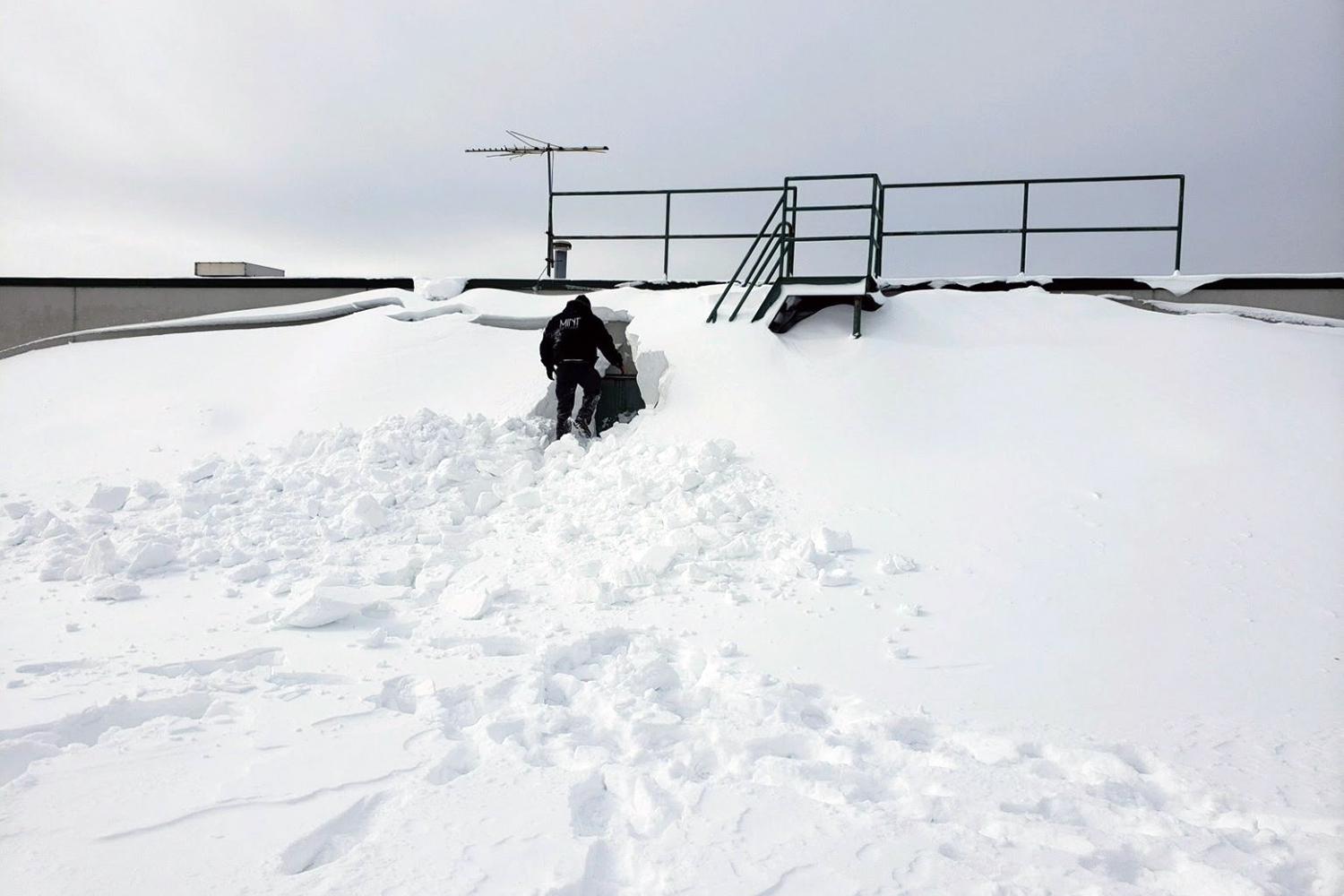
Des Moines commercial roofs spend a real portion of the year under snow, and the damage that winter causes rarely announces itself the way a summer hailstorm does. Ice dams form quietly at drains and parapets, membrane splits open at a low point that has been ponding and refreezing for weeks, and an owner often finds out about the damage only when a spring thaw sends water somewhere it was never supposed to go.
Freeze-thaw cycling is the mechanism behind most winter roof claims in this climate. Water gets into a seam, a fastener penetration, or a small membrane defect, freezes and expands, and widens that defect a little more with every cycle. A defect too small to notice in November can be a functional leak by March, and the roof's condition history matters when an adjuster is trying to determine whether the damage is a single event or accumulated seasonal wear.
Ice damming is the most common winter claim we document. When heat loss from the building melts snow on part of the roof while the perimeter stays frozen, meltwater backs up behind the ice and finds its way under the membrane, through parapet flashing, or into a wall assembly it was never designed to enter. We document ice dam location, extent, and the interior path the water took, since that path often points to a specific flashing or insulation deficiency that has to be part of the repair scope alongside the visible water damage.
Roof drains, scuppers, and gutters take a particular beating over an Iowa winter. A drain that freezes solid in January can hold standing water on the roof for weeks once temperatures climb, and that ponded water adds structural load and accelerates membrane fatigue at exactly the low points where a roof is already weakest. We check every drain and scupper on a winter damage inspection, including the ones far from any known leak, because a frozen drain on one side of the roof can be adding load the owner has no way of seeing from inside the building.
Heavy, wet snow loads carry their own structural documentation requirement separate from membrane damage. A roof holding more accumulated snow than its design load, especially over a wide, unobstructed span like a warehouse roof along I-80 or I-35, can show deflection, popped fasteners, or stress cracking in the deck that has nothing to do with the membrane itself. When an owner reports unusual roof sounds, visible sagging, or interior ceiling stress during a heavy snow winter, we document the structural symptoms alongside the roof condition and recommend an engineer's review when the signs warrant it.
Office buildings in West Des Moines, Clive, and Waukee - much of it insurance and financial-services space with tenants who expect a quiet, dry building through the winter - tend to surface ice-related claims as an interior symptom first: a stained ceiling tile, a damp spot near an exterior wall, a door that swells and sticks during a thaw. We trace those interior symptoms back to the roof area most likely responsible and document the winter-specific cause - ice damming, frozen drain, split membrane at a low point - rather than treating it as a generic leak.
Downtown, skywalk-connected buildings add mechanical penthouses and taller parapets to the winter equation. Snow drifting against a parapet or mechanical screen can pile several times deeper than the open field of the roof, and that drifted snow melts and refreezes on its own schedule, independent of the rest of the roof. We document drift patterns separately from field snow load on these buildings because the damage mechanism, and the repair scope that follows, is different.
Winter claims are easy to underdocument because the damage compounds over months instead of arriving in a single storm. We build a timeline where we can - dates of significant snow or ice events from public weather records, when interior symptoms first appeared, and what the roof looked like at each documented visit - so an adjuster is looking at a progression instead of a single snapshot after the fact.
Spring is when most winter roof claims finally get filed, once snow clears and the full extent of membrane splits, drain damage, and interior staining is visible. We inspect and document as early in that thaw window as conditions safely allow, because standing meltwater and residual ice can hide damage just as effectively as the original snow did.
We're your roofing contractor, not a public adjuster - we document and substantiate the snow and ice damage so you and your adjuster work from an accurate, complete scope.
What we look for on a winter damage inspection
Ice damming at drains and parapets, split or cracked membrane at low points, frozen or blocked scuppers, interior stains that appeared during a thaw, and structural stress signs on roofs carrying heavy accumulated snow load.
Questions Owners Ask
How does ice damming cause a roof leak?
Meltwater backs up behind ice at the roof's cold edges and finds its way under the membrane or through flashing that wasn't designed to handle standing water. We document the ice location and the interior water path together.
Can freeze-thaw cycling cause damage that shows up months later?
Yes. A small membrane defect can widen with repeated freezing and thawing until it becomes a functional leak well after the original event. We document roof condition through the season to build that history.
What if the roof shows structural stress from heavy snow load?
We document visible signs like deflection or fastener popping and recommend an engineer's structural review when the signs warrant it - that's outside a roofing contractor's scope to certify.
Do frozen drains cause claim-worthy damage?
They can. A frozen drain holds ponded water on the roof, which adds load and accelerates membrane fatigue at low points. We check every drain and scupper on a winter inspection.
Why do winter roof claims often get filed in spring?
Because snow cover hides the damage until it melts. We recommend inspecting as early in the thaw as it's safe to access the roof, since standing meltwater can still obscure some damage.
Related Roof Work
Commercial Roof Insurance Claims
Wind and Storm Damage Roof Insurance Claims
Preventive Roof Maintenance Programs