
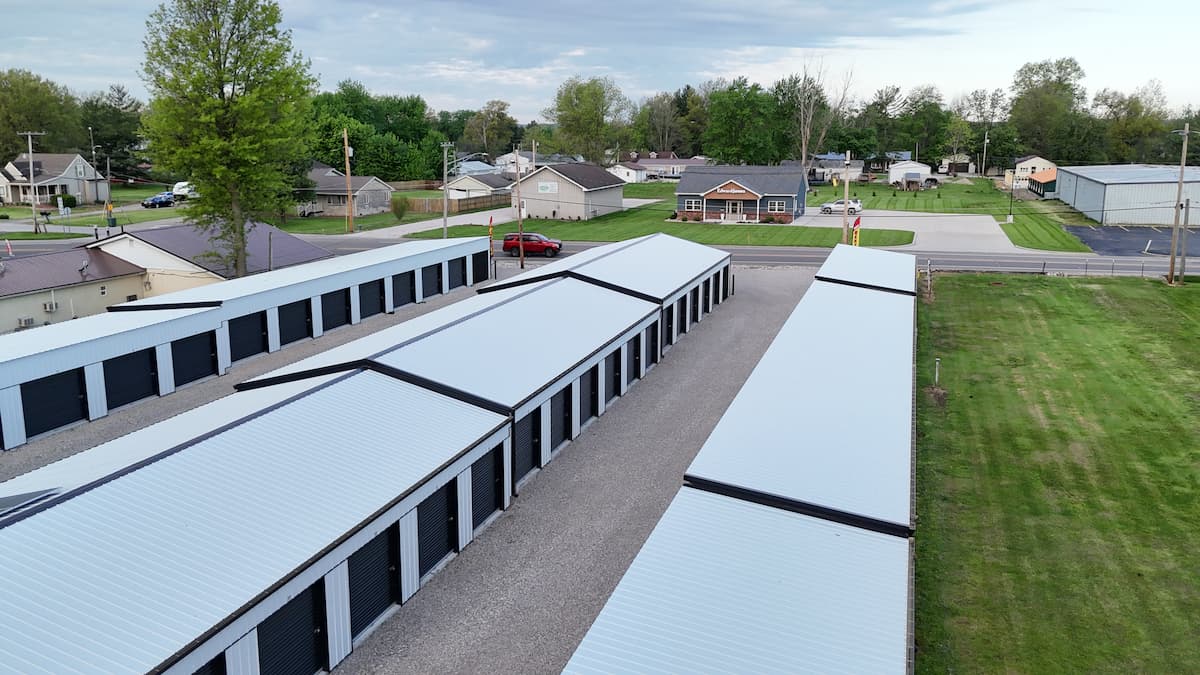
Commercial roofing for self-storage facilities, mini-storage units, and climate-controlled storage.
StorageMart has built a significant presence in the Des Moines metro, with locations including a large facility on Fleur Drive that serves customers throughout Polk County. Iowa's climate puts self-storage roofs through a demanding annual cycle that challenges every component of the roofing assembly. Des Moines winters deliver extended periods of hard freezing, frequent snow accumulation, and the ice storms that are a signature hazard of the Iowa climate. Summers bring thunderstorm complexes that produce significant hail and heavy rainfall. The spring and fall shoulder seasons subject roofing membranes to the rapid temperature swings that drive freeze-thaw fatigue across the Midwest.
Iowa's freeze-thaw cycle is arguably more mechanically demanding than climates with colder but more stable winters. Des Moines regularly experiences multiple freeze-thaw transitions per month through the November-to-April period, with temperatures swinging across the 32°F threshold dozens of times in a season. Each crossing of that threshold expands any moisture present in the roofing assembly by roughly nine percent, gradually opening micro-cracks in aged membranes and forcing apart lap seams that have lost their original bond strength. A roofing membrane that has been in service for ten or more years in this environment may be hosting dozens of areas where moisture intrusion is occurring without yet producing visible interior leaks.
Ice storms are a particular hazard for Des Moines self-storage roofs that other markets rarely face at the same frequency. When freezing rain coats a roof with half an inch to an inch of ice, that load adds 5 to 12 pounds per square foot to the roof structure — and it accumulates on top of any snow already present. Drainage becomes impossible until the ice melts, meaning that any subsequent precipitation, including additional rain on top of the ice layer, accumulates as standing water. Roofs with adequate structural capacity and proper maintenance in advance of the winter season handle these events; roofs that have deferred gutter cleaning, drain maintenance, and membrane repair face much greater risk of overload or catastrophic failure.
Hail arrives reliably in Des Moines during the prime spring thunderstorm season, typically May through July. Iowa sits in the heart of the Central Plains hail belt, and significant hail events affect the Des Moines area every year. The combination of hail damage in spring and freeze-thaw damage through winter means that Des Moines storage roofs are subject to a two-vector attack that ages them faster than facilities in markets with only one primary weather threat. Operators who inspect their roofs after hail events and address impact damage promptly prevent the compounding deterioration that occurs when hail punctures are left open to admit moisture and then freeze-thaw cycled through subsequent winters.
Modified bitumen roofing systems remain popular among Iowa commercial contractors because of their cold-weather installation flexibility and proven freeze-thaw performance. The multi-ply construction provides redundancy — a small breach in the cap sheet does not immediately create a leak if the underlying ply and interply material are intact. For self-storage facilities with many penetrations from HVAC equipment, exhaust vents, and conduit risers, the modified bitumen system's ability to be custom-fabricated around complex details at the field installation level is a practical advantage.
Climate-controlled storage is growing in importance in Des Moines as the market matures and operators seek to differentiate their offerings. Iowa winters can drive unheated storage units down to ambient temperatures that damage electronics, batteries, liquids, and other temperature-sensitive items. Customers paying for climate control expect consistent conditions, and a poorly insulated roof assembly undermines that promise while driving up heating costs. Insulation specifications of R-25 or higher are appropriate for Des Moines climate-controlled facilities given the heating degree day load the city experiences.
Drainage maintenance is a year-round responsibility for Des Moines storage operators. In fall, deciduous tree debris clogs drains and scuppers before the winter freeze sets in. In winter, ice can block drainage pathways entirely. In spring, the combination of snowmelt and heavy rainfall can overwhelm drainage systems that are partially blocked by debris that accumulated under the snow during winter. A maintenance program that clears drains in late October and re-inspects them in early March prevents the drainage failures that cause winter and spring roof loading problems.
The long, low-slope roof geometry of self-storage facilities creates particular challenges for snow removal when accumulation becomes heavy. Unlike residential roofs where snow slides off relatively quickly, storage facility roofs hold snow in place for extended periods. When late-winter warm spells arrive and snow begins melting from the top down, the bottom layers can refreeze overnight, creating a dense, heavy snowpack that remains on the roof long after air temperatures have risen above freezing. Working with a contractor who can assist with safe snow removal during extreme accumulation events prevents structural overload scenarios.
Self-storage operators in Des Moines who treat their roof systems as capital assets — tracking their age and condition systematically, performing scheduled maintenance, and planning replacements proactively — consistently achieve better outcomes than those who operate reactively. In a market where tenant trust is built on the expectation that belongings will be protected, a roof system that is known to be in good condition provides operational confidence that extends beyond the building itself to the entire customer relationship.
What to send before the roof walk
Send the roof address, leak photos, roof age if known, access instructions, tenant limits, prior reports, and the deadline driving the decision. That lets the first visit focus on the roof condition instead of chasing basic context.
Questions Owners Ask
Can this work happen while the building is occupied?
Often yes. The scope should cover access, safety, dry-in, staging, noise, interior protection, and the times when tenants or operations cannot be interrupted.
What changes the cost most?
Wet insulation, deck condition, edge metal, layer count, access, roof size, code triggers, weather timing, and the amount of repeated damage usually move the cost.
How is the condition documented?
The roof file should include photos, locations, material notes, observed defects, temporary repairs, remaining deficiencies, and recommended next steps.