
Commercial roofing for daycare & childcare facility roofing in Des Moines, IA — specifications, scheduling, and project coordination for this building type.
Lead paint is the first technical issue on any pre-1978 childcare facility re-roofing project in Des Moines. EPA's Renovation, Repair, and Painting (RRP) Rule applies to any work that disturbs lead-containing materials at a facility that serves children under six — and "disturbs" has a broad definition that includes mechanical fastening through walls, removal of lead-containing rooftop HVAC curbs, and demolition of pre-1978 parapet copings. Our crews are EPA RRP-certified. We conduct a pre-project lead assessment and include a lead remediation plan in our pre-construction scope for any pre-1978 childcare building. This isn't optional compliance — it's federal law with per-day penalties for violations.
Vapor control and moisture management in childcare facility roofing in Des Moines receives more attention than in standard commercial buildings because children are more susceptible to mold-related respiratory conditions than adults. A roof assembly with a moisture intrusion problem in a childcare building creates a licensing risk, not just a maintenance problem. We specify vapor retarder placement based on Des Moines's climate zone and the facility's specific HVAC configuration — not from a generic commercial template — and we include a moisture baseline reading of the existing deck and insulation before specifying the new assembly.
Chemical use near childcare facilities in Des Moines requires more care than on standard commercial projects. State licensing agencies and some jurisdictions have specific requirements for VOC emissions and chemical applications near childcare spaces. We pre-submit SDS sheets and product data for every adhesive, primer, and coating to the facility director before mobilization, schedule any solvent-based application during confirmed unoccupied periods, and confirm re-occupancy timing with the director based on the manufacturer's occupancy clearance guidelines.
Daycare & Childcare Roofing — Technical Questions
The EPA Renovation, Repair, and Painting Rule requires that contractors performing renovation work that disturbs lead-based paint in facilities that serve children under six hold EPA RRP certification and follow specific work practice standards — contained work areas, no dry sanding or open-air demolition, HEPA vacuum cleanup, and post-work clearance verification. If your facility was built before 1978, assume lead-based paint is present until a certified inspector tests and clears it. We are RRP-certified and include lead assessment as a standard pre-construction step on pre-1978 facilities.
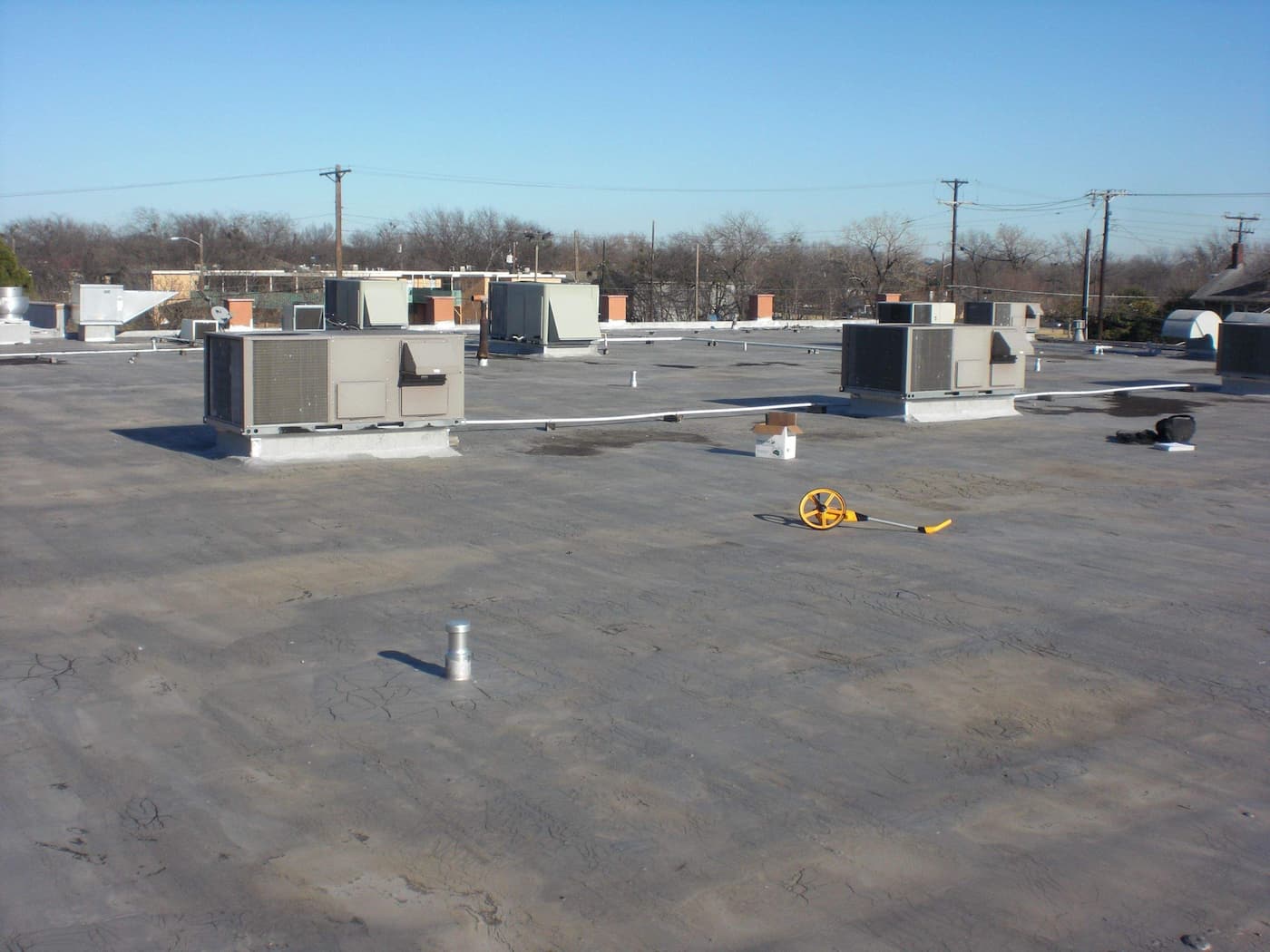
We conduct a pre-tearoff thermal scan of the existing roof system during the appropriate ambient conditions — the evening cool-down period — and take core samples at locations showing thermal anomalies. Wet insulation retains heat differently than dry insulation and shows clearly in the thermal image. Core sample results confirm moisture content and document deck condition. If wet insulation is found, it's removed and replaced as part of the re-roofing scope — not covered over with new insulation, which only traps moisture.
For work near or within childcare facilities, we select products with the lowest available VOC content — water-based adhesives where the application allows, VOC-compliant primers for the IA air quality district, and low-odor membrane systems. We don't apply solvent-based adhesives or primers on work days when the facility is occupied in any adjacent section. Every product used on a childcare roofing project in Des Moines has an SDS sheet on file at the job site and a copy submitted to the facility director before the product is used.
Most childcare facilities in Des Moines are low-slope commercial buildings — flat or low-pitch roofs with standard deck construction. A mechanically attached or fully adhered 60-mil TPO system over polyiso insulation is the appropriate specification for most childcare buildings: low-maintenance, compatible with the typical wood-frame or light commercial steel deck construction, and compatible with standard penetration types. For facilities with existing BUR or modified bitumen systems that are in recoverable condition, a coating system may extend service life at lower cost — but only after a moisture survey confirms the existing insulation is dry.
HVAC penetration relocation on a childcare building — moving a supply air intake away from an exhaust termination, raising a return air intake above the new insulation thickness — is coordinated with the facility's HVAC maintenance contractor before roofing work begins. We confirm that the proposed penetration configuration meets the manufacturer's clearance specifications and local code requirements for ventilation intakes at occupancies serving children. Penetration relocation is documented in the project record and included in the facility's equipment maintenance file.
What to send before the roof walk
Send the roof address, leak photos, roof age if known, access instructions, tenant limits, prior reports, and the deadline driving the decision. That lets the first visit focus on the roof condition instead of chasing basic context.
Questions Owners Ask
Can this work happen while the building is occupied?
Often yes. The scope should cover access, safety, dry-in, staging, noise, interior protection, and the times when tenants or operations cannot be interrupted.
What changes the cost most?
Wet insulation, deck condition, edge metal, layer count, access, roof size, code triggers, weather timing, and the amount of repeated damage usually move the cost.
How is the condition documented?
The roof file should include photos, locations, material notes, observed defects, temporary repairs, remaining deficiencies, and recommended next steps.
Related Roof Work
Hospital Surgery Center Roofing
Bank Financial Building Roofing