
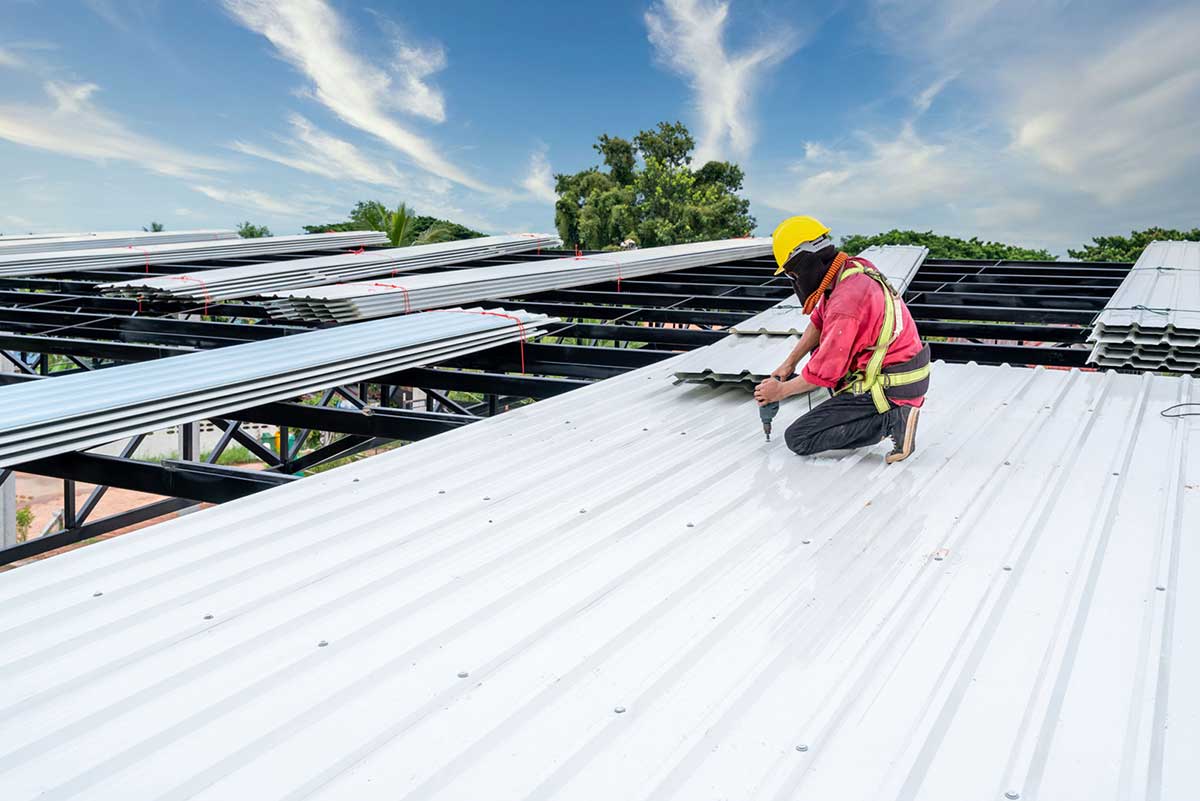
Roofing for branches, credit unions, and financial offices across the Des Moines metro and its insurance corridor.
Small roofs, high stakes, and a canopy that always leaks first
A bank branch is a small building with an outsized problem set. The roof itself is usually modest, but it sits in a high-visibility location, it shelters vaults, server rooms, and customer-facing space where a single drip becomes an incident, and it almost always has a drive-through canopy that is the single most reliable leak source on the property. Roofing a financial building is less about square footage and more about working cleanly around security, business hours, and a handful of details that have to be right.
Des Moines is one of the most banked cities in the country relative to its size, driven by a deep insurance and financial-services base, the Principal Financial campus downtown, and the Wells Fargo operations presence on the west side. That base feeds a dense network of retail branches, credit unions, and back-office financial buildings stretching from the downtown core through the West Des Moines financial district along the I-235 corridor and out into the suburban commercial strips in Ankeny, Urbandale, and Clive. We roof across that whole spectrum, from a single neighborhood branch to a multi-building corporate financial campus.
The drive-through canopy is where we look first
The canopy over the drive-through lanes is detached or semi-detached from the main building, and the transition where it meets the building wall is brutal on flashing. It cycles through Iowa's full temperature swing, takes wind-driven rain and snow from the open sides, sees overspray and grit off vehicles, and moves independently of the main structure as both settle and expand. The original builder's flashing at that joint rarely holds up for the life of the roof. We treat the canopy and its building transition as a separate scope item, re-flash the joint with a detail built for differential movement, and tie the canopy drainage in so water leaves the lanes instead of finding the deck. When a branch reports a chronic leak, this joint is the first place we go, and replacing the field membrane alone almost never fixes it.
More penetrations than the footprint suggests
For a building this size, a financial branch carries a surprising amount of rooftop equipment. Precision cooling for the server and network room runs around the clock, the standby generator and its transfer gear vent through the roof, ATM and night-deposit enclosures penetrate the deck, and the comfort HVAC for the lobby and offices adds its own curbs. Each of those is a discrete flashing detail, and the server-room cooling in particular cannot tolerate downtime, so we plan that work so cooling stays online. We document every penetration and curb before pricing and raise or replace any that no longer meet the membrane manufacturer's flashing height.
Security shapes the schedule before the roof does
Financial buildings come with access rules most commercial sites do not. Contractor badging, escort requirements near vault and cash-handling areas, and camera documentation of crew activity are standard, and they take time to arrange. We build the security-coordination timeline and crew credentialing into the bid up front so it is not a surprise that adds cost after the contract is signed. For vault-adjacent roof zones, we locate the vault from the drawings, schedule that work into approved windows, and confirm with the security team that vibration or temporary access changes will not affect operations below.
Working without closing the branch
Branches run roughly Monday through Saturday, and water intrusion over a teller line, a vault, or a server room is an immediate business problem, so we concentrate active tear-off and installation into off-hours and weekends and confirm the roof is dry before the lobby opens each morning. We coordinate noise limits during customer hours with the branch manager and the corporate facilities desk, and we keep drive-through lanes usable wherever the sequence allows, since the drive-through is often the busiest part of a branch.
Portfolio programs and community institutions alike
National banks run roofing through preferred-vendor programs with standardized scopes and national-account pricing; community banks and credit unions across central Iowa manage their buildings directly. We work inside either structure. For a multi-branch portfolio we provide consistent scoping, documentation, and pricing across every site with a single project-management contact for the facilities team, and the closeout for each building is the same: insurance and license verification before mobilization, a pre-construction safety plan, daily work and dry-in reports, the manufacturer warranty registered to the owner, and the final permit and inspection package.
Bank & Financial Building Roofing Questions
How do you schedule roofing around branch hours?
We concentrate active tear-off and installation into off-hours and weekends and confirm the roof is dry before the lobby opens each morning. Noise limits during customer hours and any escort requirements for roof access are coordinated with the branch manager and corporate facilities ahead of time.
How do you handle the drive-through canopy connection?
As its own scope item, not part of the field membrane. The canopy-to-building joint takes differential movement, wind-driven weather, and vehicle overspray, so we re-flash it with a detail built for that movement and tie the canopy drainage in. It is the most common chronic branch leak and is never solved by replacing the field membrane alone.
Can you work over active vaults and server rooms?
Yes. We locate vault and server areas from the building drawings, schedule those roof zones into approved windows, and confirm with the security team that vibration or temporary access changes will not affect operations. Server-room cooling stays online throughout the work.
What documentation do financial institutions require?
Typically insurance certificates and license verification before mobilization, a pre-construction safety plan, daily work and dry-in reports, the manufacturer warranty registered in the owner's name, and a final permit and inspection package. We work inside each institution's vendor-management and approval process.
Do you handle multi-branch roofing programs?
Yes. For a portfolio of branches we provide consistent scoping, documentation, and pricing across every location, with a single project-management contact for the corporate facilities team.
What to send before the roof walk
Send the roof address, leak photos, roof age if known, access instructions, tenant limits, prior reports, and the deadline driving the decision. That lets the first visit focus on the roof condition instead of chasing basic context.
Questions Owners Ask
Can this work happen while the building is occupied?
Often yes. The scope should cover access, safety, dry-in, staging, noise, interior protection, and the times when tenants or operations cannot be interrupted.
What changes the cost most?
Wet insulation, deck condition, edge metal, layer count, access, roof size, code triggers, weather timing, and the amount of repeated damage usually move the cost.
How is the condition documented?
The roof file should include photos, locations, material notes, observed defects, temporary repairs, remaining deficiencies, and recommended next steps.
Related Roof Work
Sports Recreation Facility Roofing