
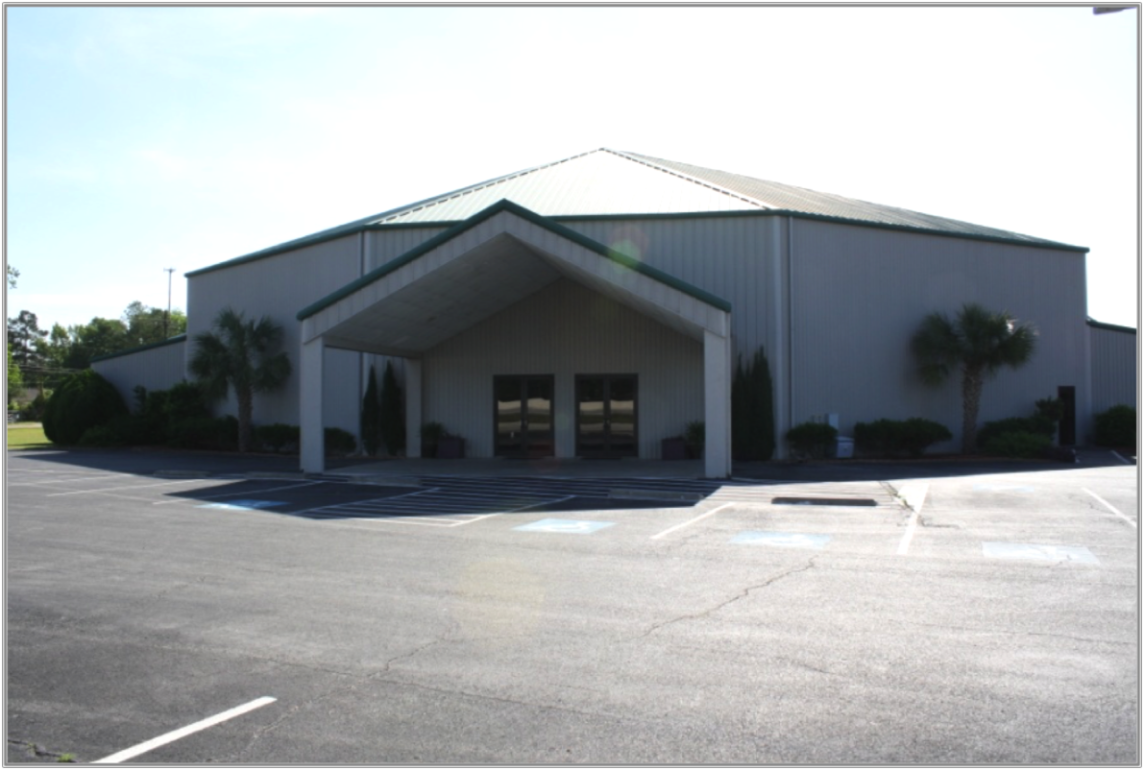
Commercial roofing for churches, houses of worship, and religious facilities.
Des Moines, Iowa has a religious community shaped by the state's agricultural heritage and midwestern values, with congregations that range from the grand downtown churches along Grand Avenue to the fast-growing suburban campuses in Urbandale, Ankeny, and West Des Moines. Grace Church, one of the largest evangelical congregations in the metro area, operates a significant campus in West Des Moines whose multi-building footprint presents exactly the kind of complex institutional roofing challenges that require genuine commercial expertise rather than residential roofing experience scaled up.
Iowa's climate sits squarely in the zone of maximum roofing stress, cold enough for serious freeze-thaw cycling and ice dam formation, hot enough in summer for significant thermal movement in membrane systems, and positioned in a weather corridor that generates both hail and severe wind events with regularity. Des Moines averages roughly 35 inches of precipitation annually, with a meaningful fraction falling as snow in November through March. The flat or near-flat roofs that dominate Iowa commercial church construction must drain efficiently to prevent ponding water from adding structural load and accelerating membrane degradation.
Ice dam formation is a recurring problem for Des Moines churches that were constructed before modern vapor and thermal strategies were well understood. When interior heat escapes through inadequate insulation, it warms the roof deck and melts accumulated snow, which then refreezes at the cold eave overhang and creates an ice dam that forces meltwater back under the roofing membrane. Churches that experience water stains at exterior walls during winter thaw cycles are typically dealing with ice dams, and the correct solution involves addressing insulation and air sealing at the ceiling plane, not simply adding more ice-and-water shield at the eave, though that is an important component of the repair.
Clear-span sanctuary structures in Des Moines churches must be sized for Iowa's snow loads, which can be substantial in heavy winters. The state building code specifies ground snow loads in the 25 to 30 pound per square foot range for the Des Moines area, and a church building committee considering a roof replacement should ask whether any added insulation in the new assembly will stress the original framing design. Long-span steel or timber trusses in mid-century church construction were sometimes designed with limited margin above the minimum required, and an engineer's review is prudent before adding significant insulation depth to an existing structure.
Summer scheduling for Des Moines church roofing aligns with the school year calendar, making June through late August the primary window. Many congregations also schedule their facility improvements to align with fiscal year transitions, Iowa church fiscal years often end June 30, matching the state's governmental cycle, which concentrates capital project approvals in late spring and creates contractor scheduling pressure in early summer. Congregations that complete their planning processes in winter and secure contractor commitments by February or March are typically rewarded with better scheduling flexibility and sometimes better pricing than those who wait until May to begin the contracting process.
The Iowa Conference of the United Methodist Church, the Catholic Diocese of Des Moines, and the Iowa-Missouri Synod of the Evangelical Lutheran Church in America all have administrative relationships with Des Moines area congregations that influence facility procurement. Many of these denominational bodies have updated their facility standards in recent years to require energy-efficiency documentation on major capital projects, reflecting broader institutional commitments to environmental stewardship. Roofing contractors who can provide energy modeling data or projected energy savings based on insulation upgrades are increasingly valued in these denominational procurement processes.
Des Moines building permits for commercial roofing are issued by the City of Des Moines Permit and Development Center, with suburban jurisdictions like Ankeny, Urbandale, and West Des Moines operating their own permitting offices. The permit process for large institutional buildings typically includes plan review with a turnaround of one to three weeks for straightforward applications. Contractors who have established relationships with these local plan reviewers and who submit complete, well-prepared permit packages consistently experience faster approvals than those who submit incomplete documentation and require multiple revision rounds.
Budget cycle realities are a recurring theme in Des Moines church roofing conversations. Many Iowa congregations operate on tight annual budgets where major capital expenditures require either a specific building fund reserve or a congregational vote to authorize spending. Phased project proposals, starting with the building in worst condition and staging remaining structures over two to three years, allow congregations to manage cash flow without deferring all maintenance indefinitely. Roofing contractors who offer this kind of multi-year planning partnership are positioned as long-term facility allies rather than one-time vendors.
Energy savings from roof upgrades are a particularly compelling economic case in Des Moines because of Iowa's cold winters. Adding insulation to a poorly insulated church roof in Des Moines can reduce annual heating costs meaningfully, and MidAmerican Energy's commercial efficiency rebate program provides financial incentives that partially offset the cost of insulation upgrades. Presenting both the comfort improvement and the economic return in a format that church finance committees can bring to their boards strengthens the case for upgrading insulation levels beyond minimum code requirements.
What to send before the roof walk
Send the roof address, leak photos, roof age if known, access instructions, tenant limits, prior reports, and the deadline driving the decision. That lets the first visit focus on the roof condition instead of chasing basic context.
Questions Owners Ask
Can this work happen while the building is occupied?
Often yes. The scope should cover access, safety, dry-in, staging, noise, interior protection, and the times when tenants or operations cannot be interrupted.
What changes the cost most?
Wet insulation, deck condition, edge metal, layer count, access, roof size, code triggers, weather timing, and the amount of repeated damage usually move the cost.
How is the condition documented?
The roof file should include photos, locations, material notes, observed defects, temporary repairs, remaining deficiencies, and recommended next steps.
Related Roof Work
Preventive Maintenance Programs